
 English
-
English
-
 Español
-
 Português
-
 Русский
-
 Français
-
 日本語
日本語
-
 Deutsch
-
 Tiếng Việt
-
 Italiano
-
 Nederlands
-
 ไทย
ไทย
-
 Polski
-
 한국어
한국어
-
 Svenska
-
 Magyar
-
 Bahasa Melayu
-
 বাংলা
বাংলা
-
 Dansk
Dansk
-
 Suomi
Suomi
-
 हिन्दी
-
 Filipino
-
 Türkçe
-
 Gaeilge
-
 العربية
-
 Bahasa Indonesia
-
 Norsk
Norsk
-
 اردو
اردو
-
 Čeština
-
 Ελληνικά
-
 Українська
-
 Basa Jawa
-
 فارسی
فارسی
-
 தமிழ்
தமிழ்
-
 తెలుగు
-
 नेपाली
-
 မြန်မာ
-
 Български
-
 ລາວ
ລາວ
-
 Latina
-
 Қазақша
-
 Euskera
-
 Azərbaycan
-
 Slovenčina
-
 Македонски
-
 Lietuvių
-
 Eesti
Eesti
-
 Română
-
 Slovenščina

Steel Structure Office Building: An Adaptable Solution for Modern Commercial Architecture
Against the backdrop of continuous upgrades in global commercial construction, office buildings have moved far beyond the traditional "build once, use forever" approach. Multinational corporations, overseas industrial parks, and international organizations now prioritize five key factors in office building design: MEP system integration, flexibility for future modifications, low lifecycle maintenance costs, structural fatigue resistance, and modular standardization. Conventional reinforced concrete office buildings often struggle to meet these evolving demands due to limited adaptability for utility upgrades, rigid structural layouts, and high long-term maintenance expenses. Drawing on extensive experience in overseas commercial construction, HB Steel Structure focuses on the long-term operational challenges faced by modern businesses. Going beyond aesthetics and basic structural performance, we examine the competitive advantages of the Steel Structure Office Building from the perspectives of engineering adaptability, integrated building systems, and lifecycle value, delivering construction solutions that better support sustainable business growth.
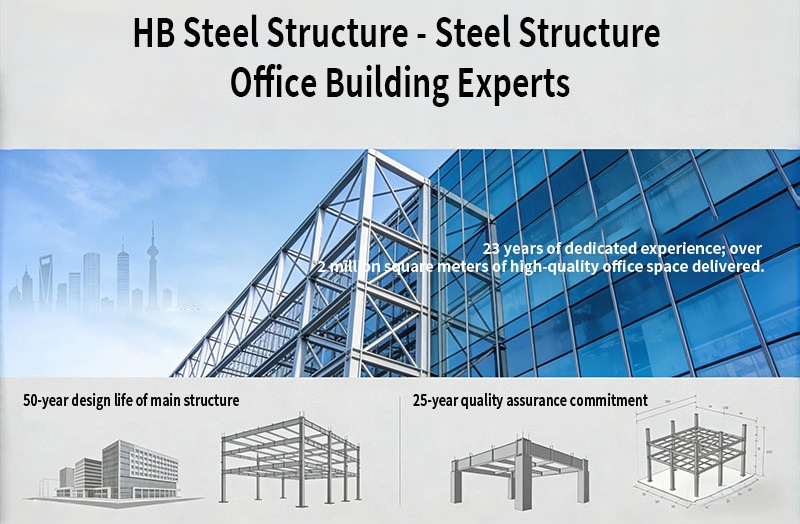
I. Modular Integrated Design for Seamless MEP System Coordination
Modern premium office buildings incorporate sophisticated mechanical, electrical, and plumbing (MEP) systems, including central air conditioning, fresh air ventilation, intelligent low-voltage systems, fire sprinklers, building automation, and integrated network infrastructure. These complex systems demand highly accurate structural coordination from the earliest design stages. Conventional cast-in-place concrete buildings often feature irregular beam and column layouts, making later modifications difficult and increasing the likelihood of pipeline conflicts, reduced ceiling heights, and challenging equipment maintenance.
A Steel Structure Office Building adopts an internationally recognized modular framing system with clean structural geometry and clearly defined load paths. During the design phase, multidisciplinary 3D coordination enables engineers to reserve utility corridors, equipment lifting openings, and maintenance access in advance. Standardized steel member dimensions and an organized structural layout maximize usable floor-to-floor height while preventing crowded service spaces caused by overlapping pipelines. This integrated, design-first approach significantly reduces on-site rework and costly future modifications, making it an ideal solution for the sophisticated infrastructure requirements of modern smart office buildings worldwide.
II. Superior Fatigue Resistance for Continuous Office Operations
Office buildings are high-occupancy facilities subjected to constant foot traffic, continuous equipment operation, and repetitive low-level vibrations. Over time, these cyclic loads can contribute to hidden structural fatigue, wall cracking, and deterioration of interior finishes in conventional buildings. This is particularly critical for overseas corporate headquarters and commercial facilities that operate year-round, where structural stability and long-term durability are essential.
Steel structures offer exceptional ductility and fatigue resistance. Their flexible framing system effectively absorbs minor vibrations generated by occupants and building equipment, reducing stress concentrations that may otherwise damage structural components. Compared with brittle concrete structures that are more susceptible to cracking, steel maintains overall structural integrity over extended service periods, helping prevent cracks and deformation in walls, floors, and suspended ceilings. The result is a more refined, durable, and stable working environment that fully supports continuous business operations.
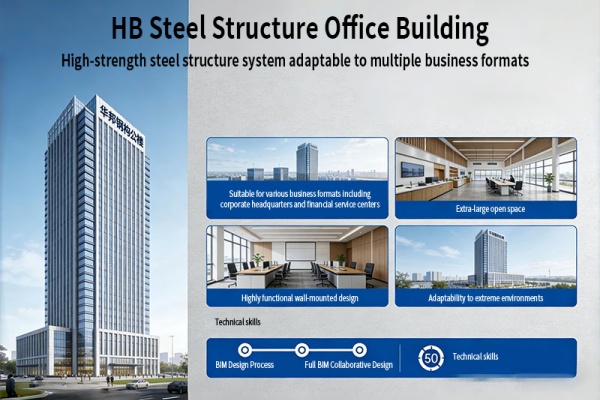
III. Flexible Structural Layouts That Evolve with Business Growth
Business requirements change rapidly. Workforce expansion, departmental restructuring, technology upgrades, and evolving operational models are common throughout the life of a commercial property. Conventional office buildings rely heavily on fixed load-bearing walls and rigid structural systems, making renovations, utility upgrades, and space reconfiguration both expensive and technically challenging. As business needs evolve, these limitations often force companies to undertake costly renovations or relocate entirely.
A Steel Structure Office Building utilizes an open-frame structural system that eliminates dependence on load-bearing interior walls, creating a flexible architectural concept based on a permanent structural frame combined with adaptable interior spaces. Whether adding smart office areas, creating dedicated R&D facilities, expanding conference centers, or upgrading building systems, modifications can be completed efficiently without compromising the primary structure. This adaptable design philosophy allows office buildings to evolve alongside business growth, overcoming the limitations of conventional buildings that become functionally outdated soon after completion.
IV. Lower Lifecycle Maintenance Costs for Long-Term Operational Efficiency
In overseas markets, labor-intensive maintenance and renovation work can represent a significant portion of a building's lifetime ownership cost. The true value of an office building is measured not only by its construction cost but also by decades of efficient operation. Conventional concrete buildings frequently encounter issues such as water infiltration, wall cracking, surface deterioration, and pipeline corrosion, all of which require substantial ongoing maintenance investment.
A Steel Structure Office Building offers excellent structural durability through professional corrosion protection, fireproofing, and advanced sealing systems. These protective measures provide outstanding resistance to corrosion, aging, and deformation while minimizing the need for major structural repairs. Furthermore, the modular configuration of steel components allows easier access for utility maintenance, component replacement, and localized renovations without extensive demolition. This significantly reduces labor costs, material waste, and operational disruptions. For businesses with long-term investment horizons, steel structures provide lower maintenance requirements, greater durability, and enhanced asset value throughout the building's service life.
V. Prefabricated Dry Construction for Urban Business Districts
Many overseas office buildings are located in central business districts or key industrial parks where environmental regulations and construction controls are particularly stringent. Extended periods of noisy, dusty, or high-pollution construction are often prohibited in order to minimize disruption to surrounding businesses and public spaces. Traditional cast-in-place construction involves extensive concrete pouring, curing, plastering, and other wet trades that generate significant dust, noise, and construction waste.
A Steel Structure Office Building is manufactured primarily through factory prefabrication and assembled on-site using dry construction methods. The process eliminates large-scale concrete casting and substantially reduces dust, noise, and construction debris. As a result, project execution has minimal impact on neighboring office buildings, commercial activities, and the surrounding urban environment. This clean, efficient construction approach fully complies with the strict environmental standards commonly enforced in major international business districts while enabling faster project delivery.
Unlike conventional buildings that emphasize only the construction phase, a Steel Structure Office Building delivers long-term value through integrated MEP systems, superior fatigue resistance, flexible space planning, and reduced lifecycle maintenance costs. These advantages closely align with the evolving priorities of modern international businesses seeking operational efficiency, adaptability, and sustainable asset performance.
Looking ahead, HB Steel Structure will continue to advance commercial steel structure technologies by enhancing modular construction systems, integrated building services, and long-term maintenance solutions. Through continuous innovation and engineering excellence, we remain committed to delivering high-quality, future-ready Steel Structure Office Building solutions that support the sustainable growth of businesses around the world.
I. Modular Integrated Design for Seamless MEP System Coordination
Modern premium office buildings incorporate sophisticated mechanical, electrical, and plumbing (MEP) systems, including central air conditioning, fresh air ventilation, intelligent low-voltage systems, fire sprinklers, building automation, and integrated network infrastructure. These complex systems demand highly accurate structural coordination from the earliest design stages. Conventional cast-in-place concrete buildings often feature irregular beam and column layouts, making later modifications difficult and increasing the likelihood of pipeline conflicts, reduced ceiling heights, and challenging equipment maintenance.
A Steel Structure Office Building adopts an internationally recognized modular framing system with clean structural geometry and clearly defined load paths. During the design phase, multidisciplinary 3D coordination enables engineers to reserve utility corridors, equipment lifting openings, and maintenance access in advance. Standardized steel member dimensions and an organized structural layout maximize usable floor-to-floor height while preventing crowded service spaces caused by overlapping pipelines. This integrated, design-first approach significantly reduces on-site rework and costly future modifications, making it an ideal solution for the sophisticated infrastructure requirements of modern smart office buildings worldwide.
II. Superior Fatigue Resistance for Continuous Office Operations
Office buildings are high-occupancy facilities subjected to constant foot traffic, continuous equipment operation, and repetitive low-level vibrations. Over time, these cyclic loads can contribute to hidden structural fatigue, wall cracking, and deterioration of interior finishes in conventional buildings. This is particularly critical for overseas corporate headquarters and commercial facilities that operate year-round, where structural stability and long-term durability are essential.
Steel structures offer exceptional ductility and fatigue resistance. Their flexible framing system effectively absorbs minor vibrations generated by occupants and building equipment, reducing stress concentrations that may otherwise damage structural components. Compared with brittle concrete structures that are more susceptible to cracking, steel maintains overall structural integrity over extended service periods, helping prevent cracks and deformation in walls, floors, and suspended ceilings. The result is a more refined, durable, and stable working environment that fully supports continuous business operations.
III. Flexible Structural Layouts That Evolve with Business Growth
Business requirements change rapidly. Workforce expansion, departmental restructuring, technology upgrades, and evolving operational models are common throughout the life of a commercial property. Conventional office buildings rely heavily on fixed load-bearing walls and rigid structural systems, making renovations, utility upgrades, and space reconfiguration both expensive and technically challenging. As business needs evolve, these limitations often force companies to undertake costly renovations or relocate entirely.
A Steel Structure Office Building utilizes an open-frame structural system that eliminates dependence on load-bearing interior walls, creating a flexible architectural concept based on a permanent structural frame combined with adaptable interior spaces. Whether adding smart office areas, creating dedicated R&D facilities, expanding conference centers, or upgrading building systems, modifications can be completed efficiently without compromising the primary structure. This adaptable design philosophy allows office buildings to evolve alongside business growth, overcoming the limitations of conventional buildings that become functionally outdated soon after completion.
IV. Lower Lifecycle Maintenance Costs for Long-Term Operational Efficiency
In overseas markets, labor-intensive maintenance and renovation work can represent a significant portion of a building's lifetime ownership cost. The true value of an office building is measured not only by its construction cost but also by decades of efficient operation. Conventional concrete buildings frequently encounter issues such as water infiltration, wall cracking, surface deterioration, and pipeline corrosion, all of which require substantial ongoing maintenance investment.
A Steel Structure Office Building offers excellent structural durability through professional corrosion protection, fireproofing, and advanced sealing systems. These protective measures provide outstanding resistance to corrosion, aging, and deformation while minimizing the need for major structural repairs. Furthermore, the modular configuration of steel components allows easier access for utility maintenance, component replacement, and localized renovations without extensive demolition. This significantly reduces labor costs, material waste, and operational disruptions. For businesses with long-term investment horizons, steel structures provide lower maintenance requirements, greater durability, and enhanced asset value throughout the building's service life.
V. Prefabricated Dry Construction for Urban Business Districts
Many overseas office buildings are located in central business districts or key industrial parks where environmental regulations and construction controls are particularly stringent. Extended periods of noisy, dusty, or high-pollution construction are often prohibited in order to minimize disruption to surrounding businesses and public spaces. Traditional cast-in-place construction involves extensive concrete pouring, curing, plastering, and other wet trades that generate significant dust, noise, and construction waste.
A Steel Structure Office Building is manufactured primarily through factory prefabrication and assembled on-site using dry construction methods. The process eliminates large-scale concrete casting and substantially reduces dust, noise, and construction debris. As a result, project execution has minimal impact on neighboring office buildings, commercial activities, and the surrounding urban environment. This clean, efficient construction approach fully complies with the strict environmental standards commonly enforced in major international business districts while enabling faster project delivery.
Unlike conventional buildings that emphasize only the construction phase, a Steel Structure Office Building delivers long-term value through integrated MEP systems, superior fatigue resistance, flexible space planning, and reduced lifecycle maintenance costs. These advantages closely align with the evolving priorities of modern international businesses seeking operational efficiency, adaptability, and sustainable asset performance.
Looking ahead, HB Steel Structure will continue to advance commercial steel structure technologies by enhancing modular construction systems, integrated building services, and long-term maintenance solutions. Through continuous innovation and engineering excellence, we remain committed to delivering high-quality, future-ready Steel Structure Office Building solutions that support the sustainable growth of businesses around the world.
Related News
- Building a Strong Foundation for Steel Structure Manufacturing Plant Development
- Steel Structure Concert Hall: Long-Term Construction Advantages for Premium Performing Arts Venues
- Waterproof System for Steel Structure Buildings: Building a Durable Defense Against Water Damage
- Steel Structure Factory Building Column Base Design: Building a Strong Foundation for Industrial Structures
- Four Core Systems That Drive the Industrialization of Steel Structure Residential Buildings
- Steel Structure Dormitory: A Modern Modular Housing Solution for Overseas Projects


Leave me a message