
 English
-
English
-
 Español
-
 Português
-
 Русский
-
 Français
-
 日本語
日本語
-
 Deutsch
-
 Tiếng Việt
-
 Italiano
-
 Nederlands
-
 ไทย
ไทย
-
 Polski
-
 한국어
한국어
-
 Svenska
-
 Magyar
-
 Bahasa Melayu
-
 বাংলা
বাংলা
-
 Dansk
Dansk
-
 Suomi
Suomi
-
 हिन्दी
-
 Filipino
-
 Türkçe
-
 Gaeilge
-
 العربية
-
 Bahasa Indonesia
-
 Norsk
Norsk
-
 اردو
اردو
-
 Čeština
-
 Ελληνικά
-
 Українська
-
 Basa Jawa
-
 فارسی
فارسی
-
 தமிழ்
தமிழ்
-
 తెలుగు
-
 नेपाली
-
 မြန်မာ
-
 Български
-
 ລາວ
ລາວ
-
 Latina
-
 Қазақша
-
 Euskera
-
 Azərbaycan
-
 Slovenčina
-
 Македонски
-
 Lietuvių
-
 Eesti
Eesti
-
 Română
-
 Slovenščina

Steel Structure Terminal: A New Approach to Modular Construction for Large-Scale Aviation Hubs
As global investment in aviation infrastructure continues to accelerate, airports around the world are expanding existing terminals and constructing new ones to accommodate growing passenger demand. Airport terminals are large-span public transportation hubs that serve millions of travelers while integrating passenger circulation, commercial facilities, building services, and iconic architectural design. Conventional reinforced concrete structures often struggle to meet these demanding performance requirements. With its lightweight nature, superior structural performance, and exceptional design flexibility, the steel structural system has become the preferred solution for modern international airport terminals. Leveraging extensive experience in overseas transportation infrastructure projects, HB Steel Structure delivers integrated Steel Structure Terminal solutions tailored to the operational requirements and construction challenges of modern airports, helping clients build world-class aviation hubs with efficiency and reliability.
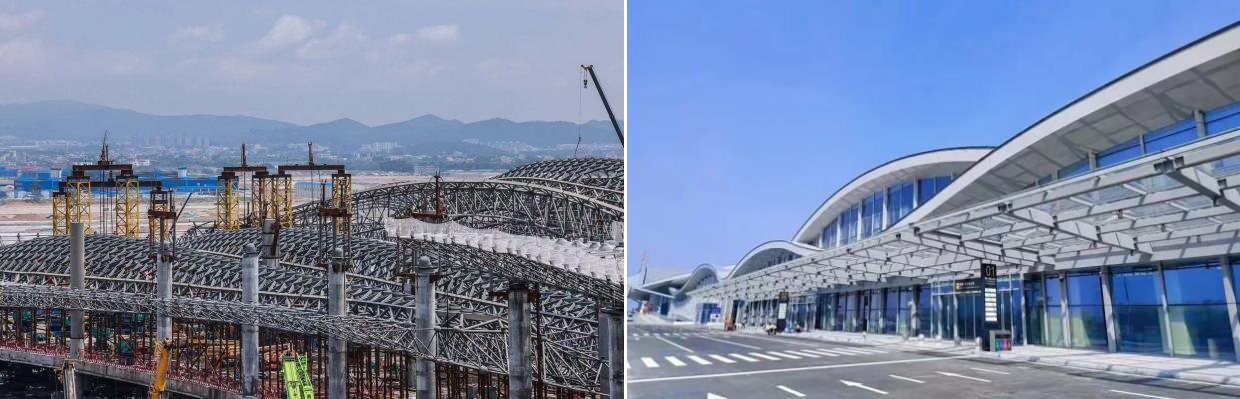
I. Ultra-Large Column-Free Spaces for Flexible Airport Layouts
Modern airport terminals feature expansive check-in halls, departure lounges, arrival areas, and transfer corridors. These spaces must accommodate security screening equipment, boarding gates, retail outlets, baggage handling systems, and continuous passenger circulation. Dense interior columns can obstruct visibility, interrupt passenger flow, and reduce operational efficiency. Utilizing high-strength steel trusses and long-span space frame systems, steel structures can easily create expansive column-free roof spans extending over hundreds of meters, providing unobstructed interior spaces with maximum planning flexibility.
During the design phase, passenger circulation zones, mechanical rooms, and commercial spaces can be organized with exceptional flexibility. Future terminal expansions, operational reconfigurations, or equipment upgrades can typically be completed by modifying interior partitions without altering the primary structural framework. The open-span design also accommodates extensive skylight systems that maximize natural daylight, reducing daytime lighting energy consumption and supporting long-term sustainable airport operations.
II. Complex Curved Architectural Forms That Create Iconic Airport Landmarks
Airport terminals often serve as the architectural gateway to a city, showcasing distinctive designs through flowing rooflines, sweeping cantilevered canopies, and curved façades that establish memorable urban landmarks. Reinforced concrete structures are limited by their weight and construction complexity, making intricate curved geometries difficult and costly to execute. Steel structures, however, feature lightweight, highly adaptable components that can accurately realize sophisticated curved surfaces, long cantilevers, and complex three-dimensional forms.
Custom-fabricated steel member s are manufactured with precision in controlled factory environments before being assembled on-site, faithfully translating the architect's design vision into reality. Combined with metal curtain walls and expansive glazed façades, steel structures create striking terminal buildings with exceptional visual identity. HB Steel Structure further enhances project quality through specialized detailing of complex terminal connections, ensuring precise curved truss assembly while maintaining both architectural elegance and structural integrity.
III. Efficient Modular Construction for Time-Critical Airport Projects
Many overseas airports are located near major metropolitan areas, where expansion projects must often be completed in phases to avoid disrupting ongoing flight operations. Construction windows are limited, workspaces are constrained, and prolonged closures are rarely feasible. Traditional cast-in-place concrete construction requires lengthy schedules and extensive wet trades, making it difficult to satisfy these demanding project constraints.
Steel Structure Terminal projects adopt a fully prefabricated construction approach. Steel trusses, columns, and enclosure systems are fabricated, corrosion-protected, and quality-inspected in manufacturing facilities before being transported to the project site for modular assembly. This significantly reduces on-site concrete work, plastering, and other labor-intensive processes, dramatically shortening construction schedules.
The modular construction method also minimizes construction waste, lowers noise levels, and enables phased installation, allowing airport operations and passenger movement to continue with minimal disruption while complying with strict airport construction management requirements.
IV. Comprehensive Protection Systems That Meet International Safety Standards
Airport terminals operate continuously as high-occupancy public buildings and must satisfy rigorous international requirements for seismic resistance, wind resistance, fire protection, corrosion resistance, and acoustic performance. Large terminal roofs are constantly exposed to strong winds, heavy rainfall, ultraviolet radiation, and, in coastal environments, aggressive salt-laden air.
HB Steel Structure provides a comprehensive protection system specifically engineered for airport terminals. Primary steel member s receive multiple layers of high-performance weather-resistant anti-corrosion coatings to withstand harsh outdoor environments. Certified fireproof coatings are applied throughout the structural system, while carefully designed fire compartments and widened evacuation routes ensure compliance with international transportation building fire safety regulations.
Comprehensive waterproof sealing systems are incorporated into roof and curtain wall joints to prevent water infiltration, even across extensive roof areas. Structural vibration control measures are also optimized to minimize vibrations and noise generated by aircraft movements and passenger traffic, creating a quieter and more comfortable terminal environment.
V. Integrated MEP Coordination for Complex Airport Building Systems
Airport terminals accommodate highly sophisticated building service systems, including baggage handling equipment, central HVAC systems, ventilation, fire suppression, flight information networks, lighting systems, and passenger boarding bridge utilities. These mechanical, electrical, and plumbing (MEP) systems require dense and carefully coordinated routing throughout the building. In conventional concrete structures, creating or modifying service openings after construction is both difficult and potentially damaging to the structural system.
Steel structural frames provide clean, organized layouts that facilitate early coordination between structural and MEP designs. During the design phase, openings for equipment, utility corridors, and boarding bridge connections can be accurately incorporated into the structural framework. Service lines are installed efficiently within the structural grid during construction without requiring extensive cutting or modifications afterward.
Standardized connection interfaces also simplify future equipment replacement, maintenance, and system upgrades, significantly reducing long-term operational and maintenance costs throughout the terminal's service life.
Precision Engineering for Airport Steel Structures Supporting the Future of Global Aviation
The defining characteristics of airport terminals—including long-span structures, high passenger volumes, continuous operation, and landmark architectural significance—place exceptionally demanding requirements on every stage of steel structure design, fabrication, installation, and protection. Drawing on extensive experience in international transportation infrastructure projects, HB Steel Structure maintains strict quality control throughout every phase of production, from precision fabrication of complex components and accurate on-site assembly to corrosion protection and waterproof detailing. Standardized modular construction techniques enable efficient delivery while overcoming the unique challenges associated with airport terminal construction.
As global aviation networks continue to expand, steel structures have become the preferred solution for new airport terminals and terminal expansion projects thanks to their outstanding advantages in spatial flexibility, architectural expression, construction speed, and lifecycle performance. Looking ahead, HB Steel Structure will continue advancing long-span airport steel construction technologies and delivering customized solutions for airports of every scale, providing dependable structural support for the next generation of aviation infrastructure worldwide.
I. Ultra-Large Column-Free Spaces for Flexible Airport Layouts
Modern airport terminals feature expansive check-in halls, departure lounges, arrival areas, and transfer corridors. These spaces must accommodate security screening equipment, boarding gates, retail outlets, baggage handling systems, and continuous passenger circulation. Dense interior columns can obstruct visibility, interrupt passenger flow, and reduce operational efficiency. Utilizing high-strength steel trusses and long-span space frame systems, steel structures can easily create expansive column-free roof spans extending over hundreds of meters, providing unobstructed interior spaces with maximum planning flexibility.
During the design phase, passenger circulation zones, mechanical rooms, and commercial spaces can be organized with exceptional flexibility. Future terminal expansions, operational reconfigurations, or equipment upgrades can typically be completed by modifying interior partitions without altering the primary structural framework. The open-span design also accommodates extensive skylight systems that maximize natural daylight, reducing daytime lighting energy consumption and supporting long-term sustainable airport operations.
II. Complex Curved Architectural Forms That Create Iconic Airport Landmarks
Airport terminals often serve as the architectural gateway to a city, showcasing distinctive designs through flowing rooflines, sweeping cantilevered canopies, and curved façades that establish memorable urban landmarks. Reinforced concrete structures are limited by their weight and construction complexity, making intricate curved geometries difficult and costly to execute. Steel structures, however, feature lightweight, highly adaptable components that can accurately realize sophisticated curved surfaces, long cantilevers, and complex three-dimensional forms.
Custom-fabricated steel member s are manufactured with precision in controlled factory environments before being assembled on-site, faithfully translating the architect's design vision into reality. Combined with metal curtain walls and expansive glazed façades, steel structures create striking terminal buildings with exceptional visual identity. HB Steel Structure further enhances project quality through specialized detailing of complex terminal connections, ensuring precise curved truss assembly while maintaining both architectural elegance and structural integrity.
III. Efficient Modular Construction for Time-Critical Airport Projects
Many overseas airports are located near major metropolitan areas, where expansion projects must often be completed in phases to avoid disrupting ongoing flight operations. Construction windows are limited, workspaces are constrained, and prolonged closures are rarely feasible. Traditional cast-in-place concrete construction requires lengthy schedules and extensive wet trades, making it difficult to satisfy these demanding project constraints.
Steel Structure Terminal projects adopt a fully prefabricated construction approach. Steel trusses, columns, and enclosure systems are fabricated, corrosion-protected, and quality-inspected in manufacturing facilities before being transported to the project site for modular assembly. This significantly reduces on-site concrete work, plastering, and other labor-intensive processes, dramatically shortening construction schedules.
The modular construction method also minimizes construction waste, lowers noise levels, and enables phased installation, allowing airport operations and passenger movement to continue with minimal disruption while complying with strict airport construction management requirements.
IV. Comprehensive Protection Systems That Meet International Safety Standards
Airport terminals operate continuously as high-occupancy public buildings and must satisfy rigorous international requirements for seismic resistance, wind resistance, fire protection, corrosion resistance, and acoustic performance. Large terminal roofs are constantly exposed to strong winds, heavy rainfall, ultraviolet radiation, and, in coastal environments, aggressive salt-laden air.
HB Steel Structure provides a comprehensive protection system specifically engineered for airport terminals. Primary steel member s receive multiple layers of high-performance weather-resistant anti-corrosion coatings to withstand harsh outdoor environments. Certified fireproof coatings are applied throughout the structural system, while carefully designed fire compartments and widened evacuation routes ensure compliance with international transportation building fire safety regulations.
Comprehensive waterproof sealing systems are incorporated into roof and curtain wall joints to prevent water infiltration, even across extensive roof areas. Structural vibration control measures are also optimized to minimize vibrations and noise generated by aircraft movements and passenger traffic, creating a quieter and more comfortable terminal environment.
V. Integrated MEP Coordination for Complex Airport Building Systems
Airport terminals accommodate highly sophisticated building service systems, including baggage handling equipment, central HVAC systems, ventilation, fire suppression, flight information networks, lighting systems, and passenger boarding bridge utilities. These mechanical, electrical, and plumbing (MEP) systems require dense and carefully coordinated routing throughout the building. In conventional concrete structures, creating or modifying service openings after construction is both difficult and potentially damaging to the structural system.
Steel structural frames provide clean, organized layouts that facilitate early coordination between structural and MEP designs. During the design phase, openings for equipment, utility corridors, and boarding bridge connections can be accurately incorporated into the structural framework. Service lines are installed efficiently within the structural grid during construction without requiring extensive cutting or modifications afterward.
Standardized connection interfaces also simplify future equipment replacement, maintenance, and system upgrades, significantly reducing long-term operational and maintenance costs throughout the terminal's service life.
Precision Engineering for Airport Steel Structures Supporting the Future of Global Aviation
The defining characteristics of airport terminals—including long-span structures, high passenger volumes, continuous operation, and landmark architectural significance—place exceptionally demanding requirements on every stage of steel structure design, fabrication, installation, and protection. Drawing on extensive experience in international transportation infrastructure projects, HB Steel Structure maintains strict quality control throughout every phase of production, from precision fabrication of complex components and accurate on-site assembly to corrosion protection and waterproof detailing. Standardized modular construction techniques enable efficient delivery while overcoming the unique challenges associated with airport terminal construction.
As global aviation networks continue to expand, steel structures have become the preferred solution for new airport terminals and terminal expansion projects thanks to their outstanding advantages in spatial flexibility, architectural expression, construction speed, and lifecycle performance. Looking ahead, HB Steel Structure will continue advancing long-span airport steel construction technologies and delivering customized solutions for airports of every scale, providing dependable structural support for the next generation of aviation infrastructure worldwide.
Related News
- Building a Strong Foundation for Steel Structure Manufacturing Plant Development
- Steel Structure Concert Hall: Long-Term Construction Advantages for Premium Performing Arts Venues
- Waterproof System for Steel Structure Buildings: Building a Durable Defense Against Water Damage
- Steel Structure Factory Building Column Base Design: Building a Strong Foundation for Industrial Structures
- Steel Structure Office Building: An Adaptable Solution for Modern Commercial Architecture
- Four Core Systems That Drive the Industrialization of Steel Structure Residential Buildings


Leave me a message